How Not to Write a Diplomatic Cable
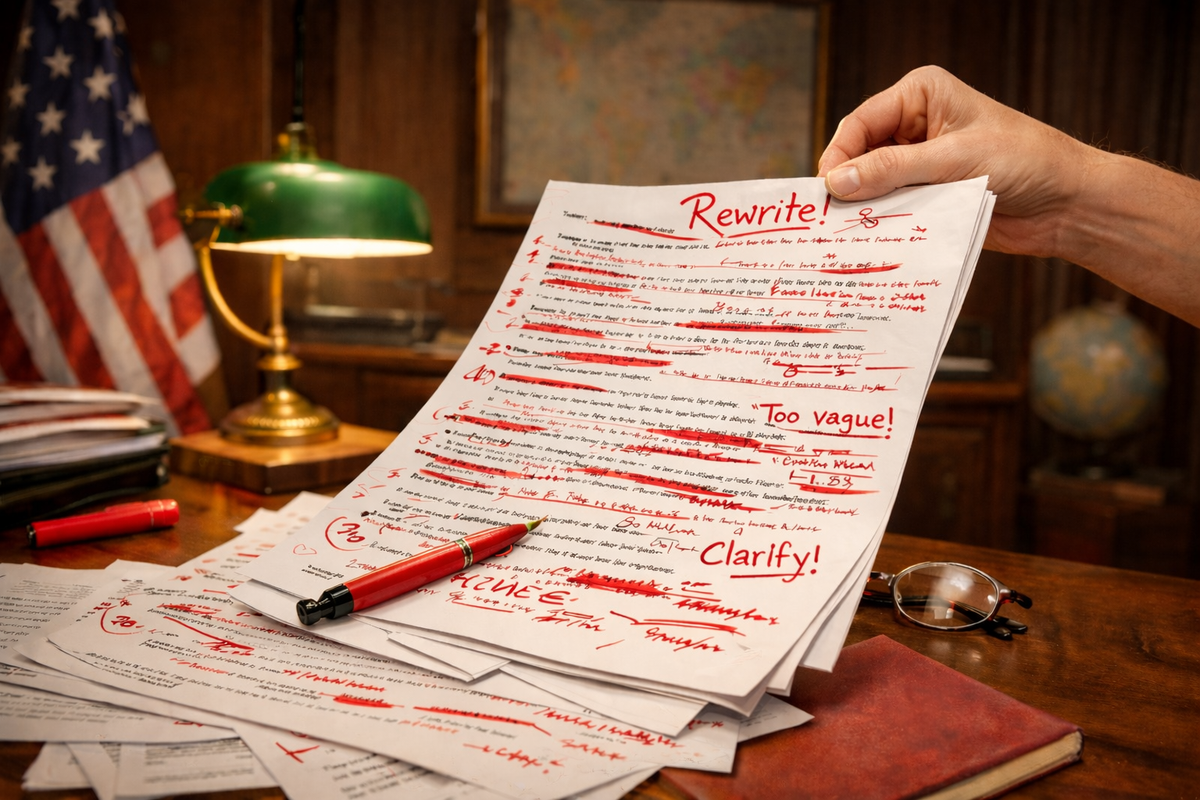
Nothing rewires your idea of "good writing" faster than an Ambassador handing your first diplomatic cable back bleeding red.

Nothing rewires your idea of "good writing" faster than an Ambassador handing your first diplomatic cable back bleeding red.
I had studied the form, read dozens of cables, and spoken with seasoned cable writers. In the hubris of my thirties, however, I genuinely believed I was going to crush the cable-writing game.
After all, I had written two senior theses, had my master's dissertation published, been accepted into three prestigious PhD programs, and drafted multiple well-received government reports and analyses.
I thought I would write the better cable. I was wrong. Very wrong.
My first Ambassador was old school. She liked cables printed and marked up by hand. I was warned she was meticulous. I was undeterred. My draft, detailing her trip to Talas, Kyrgyzstan, was filled with context and nuance and strategic analysis. Brilliant. Only it wasn't.
She returned it looking like it had been in a knife fight. The entire document was bleeding red. No hyperbole. I could barely make out some of the original text under the edits.
To say I was deflated would be an understatement. What had just happened?
A few minutes later, almost on cue, the Ambassador appeared. She smiled, looked directly at me, and thanked me for a strong first draft, adding she had "added a few edits." Wait… what? "A few?"
Then she explained. The writing was strong, but it was written for the wrong audience. Washington wasn't sitting in Bishkek. They didn't know the context. They didn't have the nuance. I had buried the story in details that mattered to me, not to the reader.
This memory came flooding back recently after reading a thoughtful post by Katelyn Bourgoin about why experts often lose out on LinkedIn to people with far less experience. Her argument was simple. And uncomfortable. And spot on.
Experts tend to overcomplicate things. Non-experts, unburdened by the "fear of being obvious" (FOBO), simply share what feels natural. It turns out to be exactly what most people need.
I see this pattern more and more. Many senior leaders and professionals either avoid writing altogether or publish content so dense and nuanced that the message suffocates under its own sophistication.
I want to see more writing from these leaders, the ones with real, lived experience, but delivered in a way people can actually absorb. Not dumbed down... just free of the instinct to include every detail from decades of leadership. If we cannot translate our experience into human stories, we risk losing the audience before we even begin.
As I lean further into writing myself, that early lesson keeps resurfacing. My job is not to prove how much I know (or, uhhh, how funny I am). My job is to help the reader grasp my point (whatever it happens to be today) in a human way.
So here's the question for today, and one many of us might ask more often:
Are you holding back your expertise… or hiding it behind layers of complexity?
Because if the Ambassador taught me anything, it's that clarity isn't simplicity. It's respect for your reader.